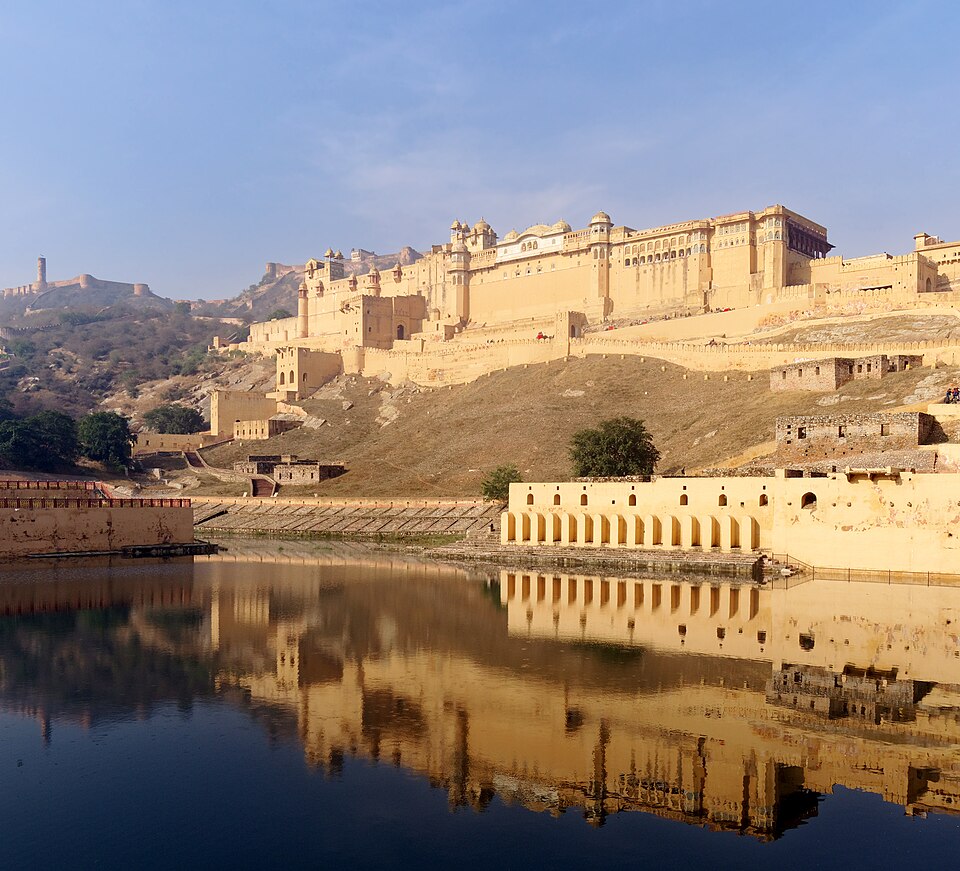
Explore Jaipur Like a Pro with Your own Map and Schedule
Jaipur is a vibrant city with a romantic ambience and stunning architecture. Jaipur is known as the “Paris of India”. It is the Gateway of Rajasthan and the Golden Triangle of India’s famed. Stunning royal architecture attracts a vast range of tourists from India and international tourists.
You can explore the Amber Palace, the City Palace, and Hawa Mahal. These three spots are famous for their grand architecture and historical significance. Some famous places to explore in Jaipur are Jantar Mantar, Nahargarh Fort, Jal Mahal, Jaigarh Fort, Birla Mandir, Albert Hall Museum and Johri Bazar.
Transport, Arrival at Jaipur:
- Via bus, RSRTC’s main bus stand (near Jaipur railway station or Sindhi Camp).
- Via bus, the main railway station name is Jaipur Junction (JP).
- Via flight, the Jaipur airport name is Jaipur International Airport (JAI). It is also known as Sanganer Airport.
Note :
- Always prefer ride-hailing apps as an example Uber and Ola. It is the safest option. If you are new, then try to avoid the auto rickshaw.
- If you are comfortable driving in the city, then you can rent a scooter (300 to 400 rupees per day).
- If you are in a cab, bus, scooter or auto rickshaw, then be aware of your surroundings.
- If you are alone, then be careful to travel in an isolated area, especially at night. Try to avoid travelling during the night.
- If you are confused about selecting a travel option, then talk with the hotel and local.
Accommodation :
Hostel: Some hostels have positive reviews by different travellers here: Madpackers Jaipur, Blue Beds Hostel, Hoztel Jaipur, The Hosteller Jaipur, MI Road.
Hotel: Based on positive reviews of other travellers, some hotels: Pearl Palace Heritage, Umaid Mahal-A heritage Style Boutique Hotel, Shahpura House, Hotel Arya Niwas, Vesta International.
Recommended order to explore Jaipur :
Option 1: Details explore the best places
Amber Palace → Jaigarh Fort → Nahargarh Fort → Jal Mahal → Hawa Mahal → City Palace → Jantar Mantar → Albert Hall → Johri Bazaar.
Option 2: Short Time with Quality
Amber Palace → City Palace → Hawa Mahal.
Amber Palace:

This palace is famous for its opulent architecture. Amber Palace is also known as Amer Fort. This fort offers a unique experience, providing panoramic views of the surrounding Maota Lake and Landscape.
Ticket :
- Ticket booking: You can book a ticket directly from the counter. Otherwise, you can book tickets online (website).
General Tickets (Day): Indian Adult 100, Indian Student 20, Foreigner Adult 500 and Foreigner Student 150.
- Timing: 8:00 AM to 5:30 PM or 6:00 PM.
General Tickets (Night): All visitors need to pay 100 rupees.
- Timing: 7:00 PM TO 9:00 PM.
The difference between day and night to explore Amer Fort:
During the day, you can explore the entire fort, but at night, you can explore only the sound and light shows. Sound shows are also available in Hindi and English.
Free Entry :
- Children below 7 years.
- Entry for Student groups is generally free every day between 10:00 AM and 05:00 PM, subject to the approval of their respective Institute.
- Free Entry days: 30 March, 18 May, 27 September, and 18 April.
Inside the Amber Fort :
There are four different levels in the Amer Fort. Each level of Amer Fort is a Courtyard.
- The first courtyard is known as Jaleb Chowk. This area is used for the public
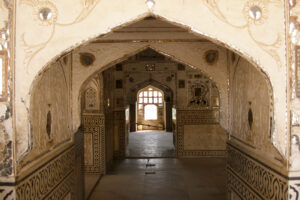
Inside the Amber Palace (Source: wikipedia.org) Soldiers gathering before going further in.
- The second courtyard is known as Diwan-e-Aam and Suhag Mandir. It is a large hall which is decorated with beautiful pillar structures. The king met with the common people.
- The third courtyard is known as Ganesh Pol and is a private palace. It was used for the minister and the private guest. It is well decorated with beautiful marble pillars.
- The inner level or fourth courtyard is known as the Zenana. It was the primary and private section. It was for the Royal women and 12 queens. There were different ramps or entrances for different queens. This courtyard consists of a secret passage to Jaigarh fort and a water channel for cooling.

Note :
- If you want to know about the Amber Fort in depth, then you can hire a guide. The cost of the guide is 400 to 800 rupees for a few hours.
- If you want to take a beautiful picture, then you need to purchase a ticket
- Around 50 rupees for a camera and 200 rupees for a video camera.
Jaigarh Fort :

Jaigarh Fort is one of the Majestic hilltop forts in Jaipur. It is also known as the Fort of Victory. This fort is made of red sandstone. The world’s longest cannon on wheels exists here. The weight of the cannon (Jaivana Cannon ) is 50 tonnes.
Ticket to explore :
Indian: adult 150 rupees, Children (5-12 years old) 75 rupees and students 50 rupees (with a valid ID).
Foreigners: Adults 200 rupees, and Students or children 100 rupees.
Additional: Still camera 50 rupees and Video camera 200 rupees. If you want to know about the history and the Jaigarh fort, then you can hire a local guide. The normal guide cost of the fort is 200-500 rupees for 2 hours, while according to the government rate is 250-350 rupees per person. The government rate is higher, but it is fixed.
Private Tour agent with Transport :
₹ 1000-2000 per person (in group)- Explore Jaigarh, Amber Fort, and other places within a half-day. 2000-4000 rupees per person to explore Jaigarh, Nahargarh and Amber fort within a Full day.
Maharaja Sawai Jai Singh II had built Nahargarh Fort on the Aravalli Hills. The purpose of building the Fort was to protect the city from enemies. This fort offers a stunning sunset view of the Pink City.
How to get here: The Distance between Nahargarh fort and Jaigarh fort is 5.5 kilometres. You can use Ola and Uber to arrive at the Nahargarh fort. It is the safest option; it will protect you from scams and bargaining. The fare ranges from 200-400 rupees (Hilly ride).
Book a ticket :
Book: You can book your ticket from the entrance. They mainly accept debit cards, credit cards and NFC mobile payment. Generally, they take cash.
Explore Duration: If you want a quick visit, then 1-2 hours, a standard visit 2-3 hours, and a depth visit 3-4 hours is enough.
Time: 10 AM (Open) to 5:30 PM (Close).
Indian: Adult around 50 rupees and student 5 rupees (Including camera).
Foreigners: Adults, 200 rupees; students, 25 rupees.
Jal Mahal

Jal Mahal sits in the middle of Man Sagar Lake. Jal (Hindi) means water, and mahal (Hindi) means Monument. You can see unique types of Rajput architecture, terrace gardens, Theme Pavilions, and more. This moment is currently used for arranging weddings, birthday parties, receptions and other events.
How can you get there:
There are several options to get Jalmahal from Nahargarh Fort. The best and fastest option is Ola or Uber (Taxi or ride share), fare 200 to 250 rupees and duration 15-20 minutes. Another option is the local JSTSL bus, fare 17-25 rupees, duration 15-25 minutes.
Explore Jalmahal:
Booking cost: Entry is Free.
Timing to explore: You can not go inside the Jalmahal. It is a completely restricted visit inside the Mahal. You can view its beauty from the lakeside from 6 AM to 6 PM. The best time for photography is during sunset and sunrise.
Hawa Mahal:
_-_img_03.jpg)
This iconic pink sandstone is also known as the “Palace of Winds”. It is a pyramidal shape. It is famous for its identical or unique faces along with diverse small windows. There are 953 small windows in this monument. Vast amounts of balconies and small windows have been given a shape like a honeycomb. The natural ventilation system of Hawa Mahal kept it cool. It is the reason it is known as Hawa Mahal. Hawa (Hindi) means Air, and Mahal (Hindi) Means Building.
Ticket :
- Ticket Booking: You can book a ticket directly from the ticket counter. Online ticket booking website: click here.
- Ticket cost: Indian students (10 rupees), Foreign Students (100 rupees), Indian Nationals (50 rupees) and Foreign nationals (200 rupees). Students need to show their ID card.
- Time: 9:00 am. – 4:30 p.m. (Local time).
- Hawa Mahal is free of cost on Rajasthan Diwas (March 30) and World Heritage Day (April 18).
Inside Hawa Mahal: There are five floors in Hawa Mahal.
- The first floor of the Hawa Mahal is known as the Shared Mandir. This floor is used for festivities.
- The second floor is known as Ratan Mandir. This floor is surrounded by a balcony.
- The third floor is known as Vichitra Mandir. The king was spending time alone on this floor.
- The fourth floor is known as Prakash Mandir. This floor is bringing natural light into the palace. The last and fifth floor is known as Hawa Mandir. This floor guaranteed the best wind in the environment.
City Palace :

It is a complex, and it combines several courtyards, buildings and gardens. It will give you a royal lifestyle experience.
Go to the City Palace: The Distance between Hawa Mahal and to City Palace is 500 meters. You can go there via Rickshaw or on foot. By Rickshaw, you need to pay 20 rupees while walking for 10 10-minute.
Ticket :
- Book: You purchase a ticket directly from the counter.
- It is a complex, and it combines several courtyards, buildings and gardens. It will give you a royal lifestyle experience.
- Time: You can explore during the day, 9:30 AM to 5:00 PM.
- Cost (General): Indian adult 300, and Indian student and 7-12 age children 150. Foreign adults 1000 and foreign students/Children 500.

Inside the City Palace:
There are seven floors of the city Palace.
- The ground floor is known as Sukh Niwas. This floor is used for rest and a pleasant area.
- The second floor is known as Pitan Niwas Chowk. This floor was used for a hall and a colour temple.
- The third floor is known as Shobha Niwas. This floor is well decorated with tiles, mirror work and gold.
- The fourth floor is known as Chhavi Niwas. This floor is used for royal hosting and retreats.
- The fifth floor is known as Mukut Mahal. It was a crown palace.
- The sixth floor is known as Ranga Mandir. It is another temple and hall of colours.
- The top or seventh floor is known as Mukut Mandir. It is a crown temple.
Jantar Mantar :
.jpg)
The Jantar Mantar is an astronomical observation site of astronomical sites. It is famous for its Scientific and architectural significance, which is why it is recognised by UNESCO World Heritage. The world’s largest stone sundial is present here. It is able to measure the exact time to two seconds. Jantar Mantar’s 19 different instruments of collection, which are observatory complex features.
How can I get there: The distance between the City Palace and Jantar Mantar is 41 meters. You can get there by walking 1 Minute.
Explore Jantar Mantar :
Book: You can book a ticket directly from the entrance. Otherwise, you can book a ticket from the official portal in online mode.
Ticket cost: 50 rupees for Indian adults and 20 rupees for students (With a valid ID card). 200 rupees for foreign adults and 100 rupees for foreign students (with a valid ID). Generally, a camera charge is also included in the entry fees.
Time: 9:00 AM to 5:00 PM daily.
Explore: 1-2 hours is enough to explore Jantar Mantar. If you want to know about Jantar Mantar in depth, then you can hire a Local Guide. The official rate is 200 rupees per hour, and a private guide is 200-450 rupees per hour.
Albert Hall:

The Albert Hall museum is famous for Art and antiquities. It is the largest collection of art and antiquities all over Rajasthan. You must go to explore this museum if you are interested in art. The Egyptian mummy is one of the great collections of it. The name of the mummy is Tutu, and it is 2400 years old. Otherwise, Musical instruments, ancient coins, weaponry, sculptures, pottery and textiles also filled the gallery.
How can I get there:
- The distance between Jantar Mantar and the Albert Hall Museum is about 3 kilometres.
- My recommendation is to go via Ola or Uber ride sharing because you will get a fixed price.
- The fare of an Auto-Rickshaw between Jantar Mantar and the Albert Hall Museum is about ₹45 to ₹60. By walking, you need 30-40 Minutes to get there.
Explore Albert Hall Museum:
Ticket book: You can book a ticket from the Entrance (Offline). Generally, 40 rupees for Indian adults and 20 rupees for Indian students, while 300 rupees for Foreign Tourists and 150 rupees for Foreign Students. You need to take a separate ticket for the Camera (100-150 rupees). 100 rupees for all visitors night show.
Timing: 9:00 AM to 5:00 PM for the day, while 7:00 PM to 10:00 PM for the night show.
Johri Bazaar:

Additionally, you can explore Johri Bazaar and Birla Mandir in Jaipur. Johri Bazaar is one of the historic jewellery markets in Jaipur, or Pink City. This market will give you a vibrant experience. This market is generally based on bargaining. Generally, scammers target tourists who want to purchase expensive Jewellery. They sell fake Gems with fake certificates. Cherish is from the US. A jeweller sold fake traditional jewellery for 6 crore, where its actual cost was 300 rupees.
How they Scam :
- Scammers are using fake Hallmark certificates on the jewellery.
- They use social media like Instagram to create trust.
- Most scammers sell low-quality (Fake) jewellery and gemstones as genuine.
- Someone contacted you or told you that you can sell it in your home country at a good price. But it does not exist. It is just a trick to attract tourists or buyers.
- They try to give you high pressure to purchase their product. They try to do everything as soon as possible.
How to avoid :
- Do not accept any recommendation from a car driver, taxi driver or any stranger who behaves too well.
- Always prefer to purchase expensive products from a reputable, well-developed, certified shop which is close to the main square.
- Always demand a proper bill and certification. Make sure everything in the bill, like address, GST number and product details.
- Always prefer to pay with a credit card; it is safer than cash. Many international banks give facilities to protect from fraud.
- Talk with residents, where they are purchasing goods with authentic and fixed prices.
- Always avoid unsolicited help and pressure to buy as soon as possible.
- Common tips for bargaining 30% from the initial price.
- The bazaar (market) is crowded, so always stay alert from the pickpockets.
- If you are a victim of a scam, then call 1930 (cyber crime helpline).
Major Scam in Jaipur :
- Tuk-tuk or taxi, or an Auto driver overcharges after the journey. Sometimes, Your Guide and Driver inform you that you can not visit the temple without a specific cloth. They offer you some stores where they take a commission from the store. Your bill will store the price with commission.
- Fake goods with overpriced; it’s another trending scam in Jaipur. Some stores sell fake jewellery.
- Fake guide: Some people offer to purchase guiding services, and they also claim that they are employed by the Rajasthan tourist department.
- Some sadhus offer you thread bracelets and unsolicited blessings, then they demand that you money.
Recommendation :
- Use a meter and agree on a fare before starting the journey. Officially meter charge, 15 rupees first kilometre and after first kilometer 10 rupees per kilometre. The best option is to use Ola and Uber.
- Do not trust any stranger’s advice who is behaving too well.
- During purchase, try to bargain for 30%-50% off their price, and be polite.
- Wear a cloth which covers your knee and shoulder during a visit to the temple.
- Always prefer an anti-theft bag and keep your wallets and wallets in front of your pocket.
- Try to avoid unofficial guides at the palace and fort.
If you have any questions, then you can write in the comment section. Thank you.


One Comment
639clublogin
Struggled finding the right login page for 639club. Luckily, this site saved me! Quick and easy access. Worth checking out if you’re having trouble too! Here’s the link: 639clublogin