Ocean’s Deadliest Creatures Beautiful But Dangerous for Tourist
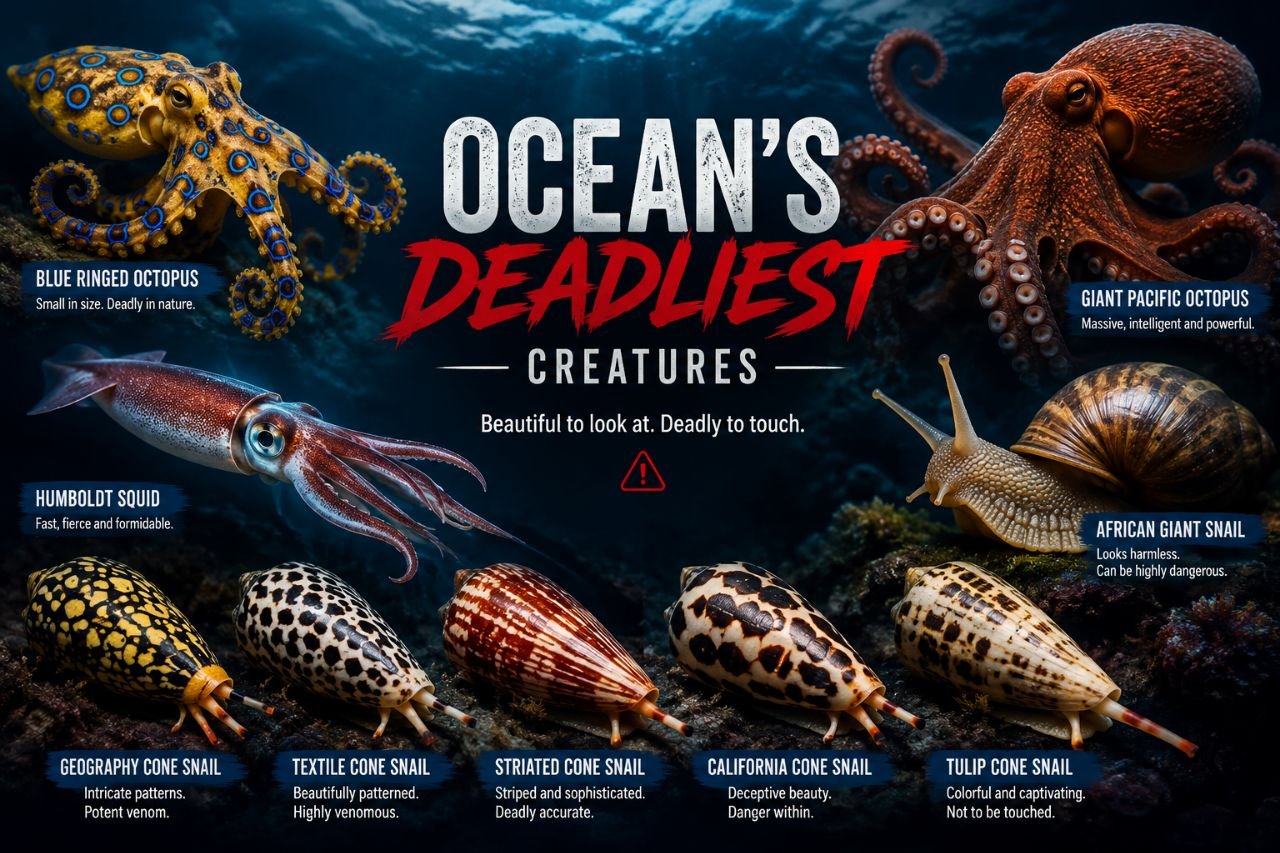
Cone snail one of the most dangerous snails in the marine world. All Cone snails are venomous. Travellers’ favourite places are the coastal region and the tropical area. They want to enjoy the beach, marine life and coral reefs. The bodies of Invertebrates are soft and beautiful, that’s why travellers want to touch and play with them. Most marine invertebrates are non-harmful, which is why we play with them without worry. But we forget that some aquatic invertebrates are very dangerous. They can kill and paralyse any animals, even humans. We discuss some dangerous aquatic invertebrates. We discuss about Ocean’s Deadliest Creatures Beautiful But Dangerous for Tourist.
Table of Contents
Togglelet's Discuss, Ocean's Deadliest Creatures Beautiful But Dangerous for Tourist
1. Blue ringed Octopus:
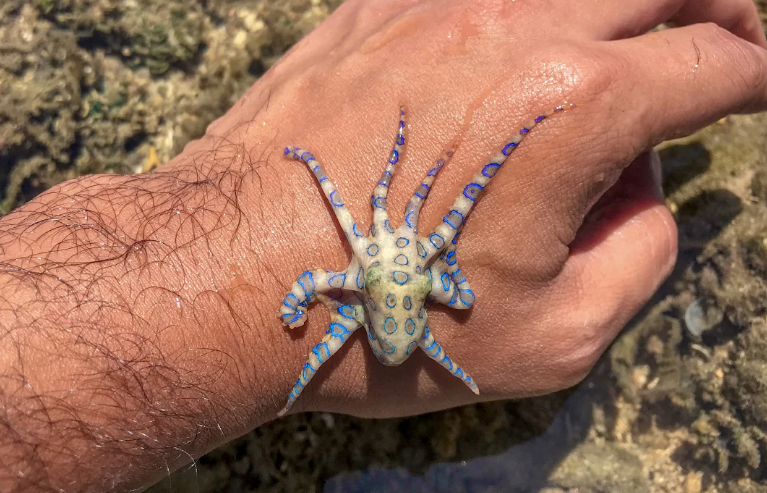
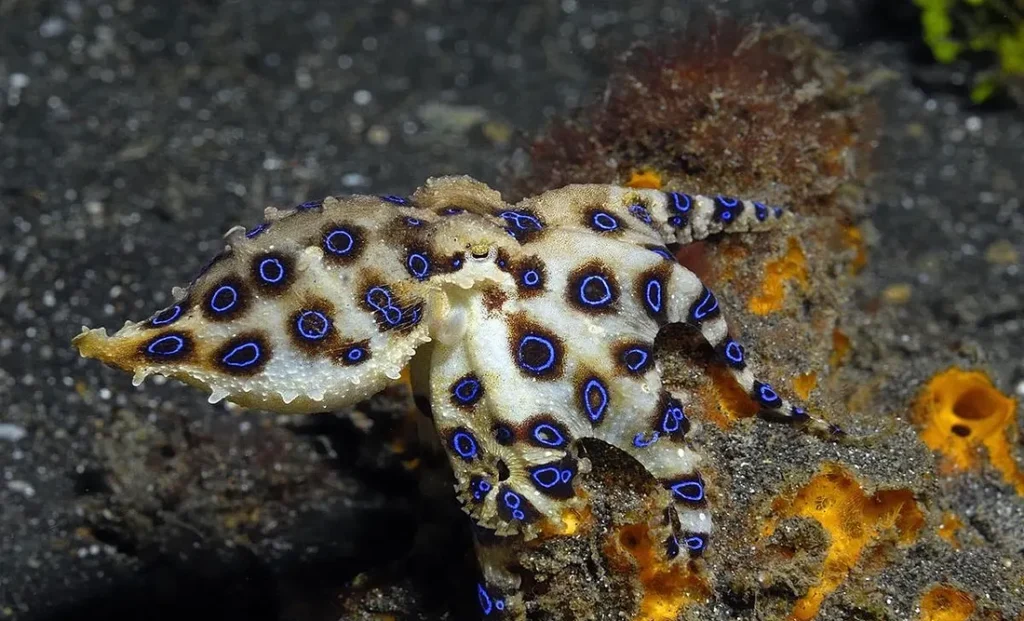
Blue Ringed Octopus is one of the most dangerous Invertebrate marine animals. It is one of the most venomous invertebrates in the marine environment. They are living in the warm water ocean. It is look like a small but it’s venom is so much powerful.
Habitat:
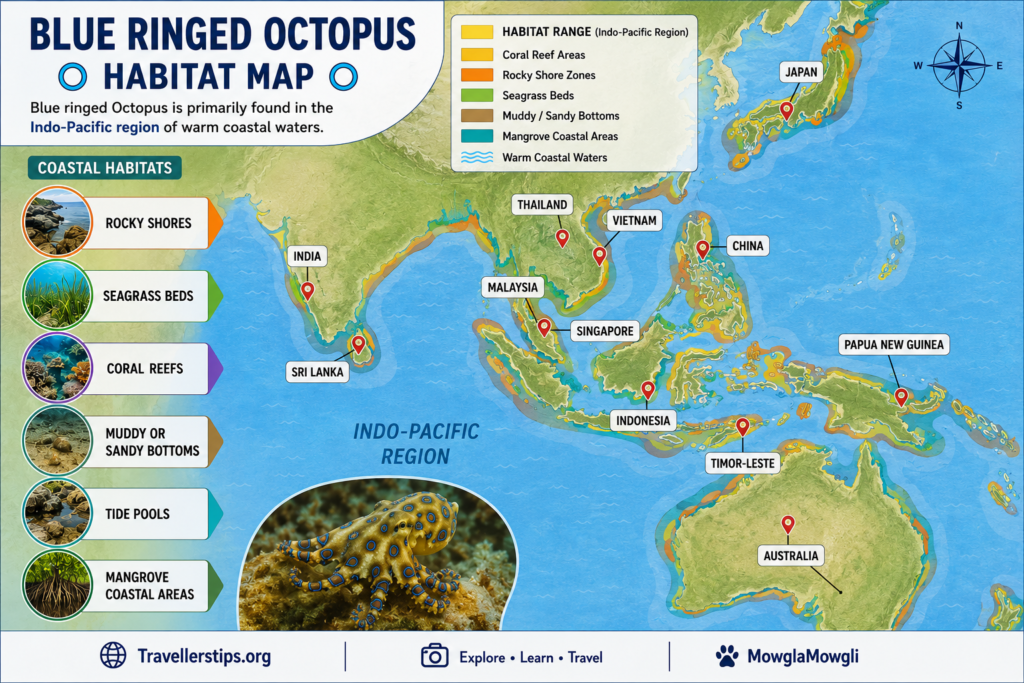
Blue-ringed Octopus primarily found in Indo-Pacific region of Warm Coastal water. Coastal habitat like rocky shores, Seagrass Beds, Coral reefs, Muddy or Sandy bottoms, tide pool and area of mangrove coastal. This venomous creatures mainly found in India, Australia, Japan, Indonesia, Papua New Guinea, Vietnam, Thailand, Sri Lanka, Singapore, Timor-Leste, Malaysia, China and others country.
How Can I Identify:
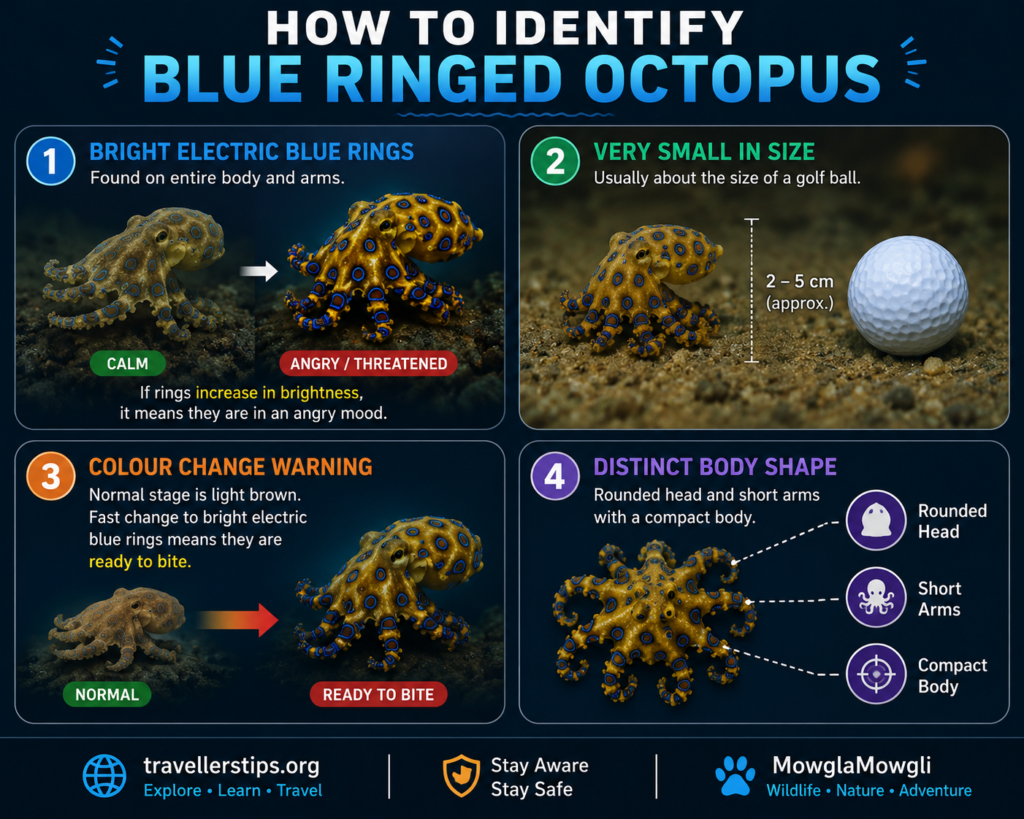
- The “bright electric Blue Ring” on his entire body and Arm. If increasing brightness, it means they are in an angry mood.
- They are very small in size, like a golf ball.
- The colour of the body in the normal stage is Light brown. Colour very fast brown to “bright electric Blue Ring”, means they are ready to bite.
Venom :
The venom contains tetrodotoxin (TTX), the most potent neurotoxin. Primarily, this toxic attack in Nervous system. There is no specific antidote for this venom.
Is it Dangerous for Human ?
The venom of one Blue-ringed Octopus can kill many adult humans. A bite able to spread venom within one minute, no matter how much of an octopus. The doctor tries to keep the breathing and to remove the venom from the body as soon as possible.
What we will do?
- Call for medical help immediately
- If possible, apply a bandage of pressure immobilisation
- Apply CPR or Artificial Breathing until you reach the hospital for treatment.
2. Geography cone Snail
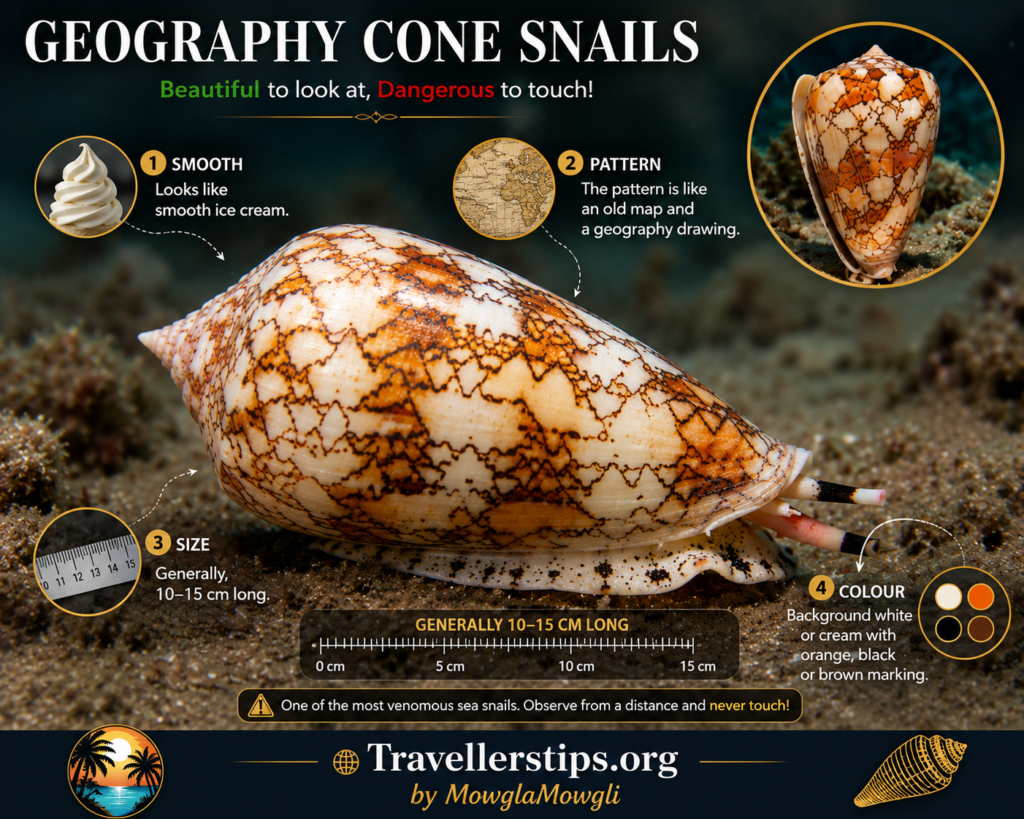
The Geography cone snail is one of the most venomous snails in the marine living world. The pattern of the snail is like an old map and Geography drawing, which is why it is known as the geography cone snail. This snail is able to catch fast-moving snails using its venomous, sharp harpoon. So, you can imagine the speed of biting capacity.
Habitat:
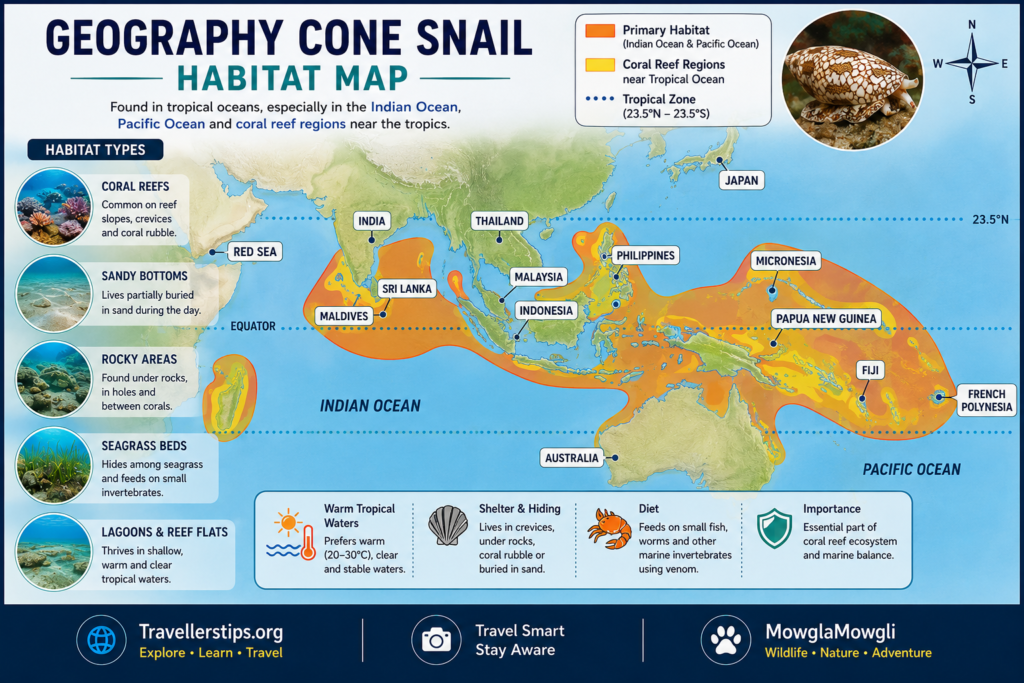
The primary habitat of the snail is the tropical ocean, such as the Indian Ocean, Pacific Ocean, and Coral reef regions near the tropical ocean.
How to Identify the Geography Cone Snail
- It looks like smooth ice cream.
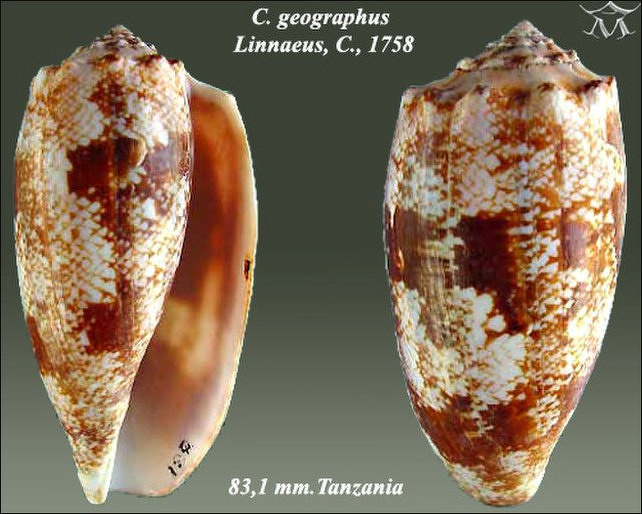
- The pattern of the snail is like an old map and a geography drawing.
- Generally, they are 10-15cm long.
- Background colour white or Cream and orange, black or brown marking.
Venom:
The venom of the Geography cone snail is so powerful. It can paralyse human, fish and other animals’ bodies. The name of the venom is conotoxins, and it consists of different types of toxic peptides. This venom primarily targets the nervous system. Muscles and our brain.
Can it kill a human?
Yes, even one sting of this snail can cause the death of a human.
What will we do?
There are no specific antidotes for this venom.
- Call an emergency immediately.
- Keep calm around the person because movement can spread the venom.
- If breathing stops, then try to give artificial breathing like CPR until medical help arrives.
- If possible, immobilise affected parts of the body.
What Avoid:
Cut the wound, apply direct ice, stick out the venom and catch the snail with bare hands.
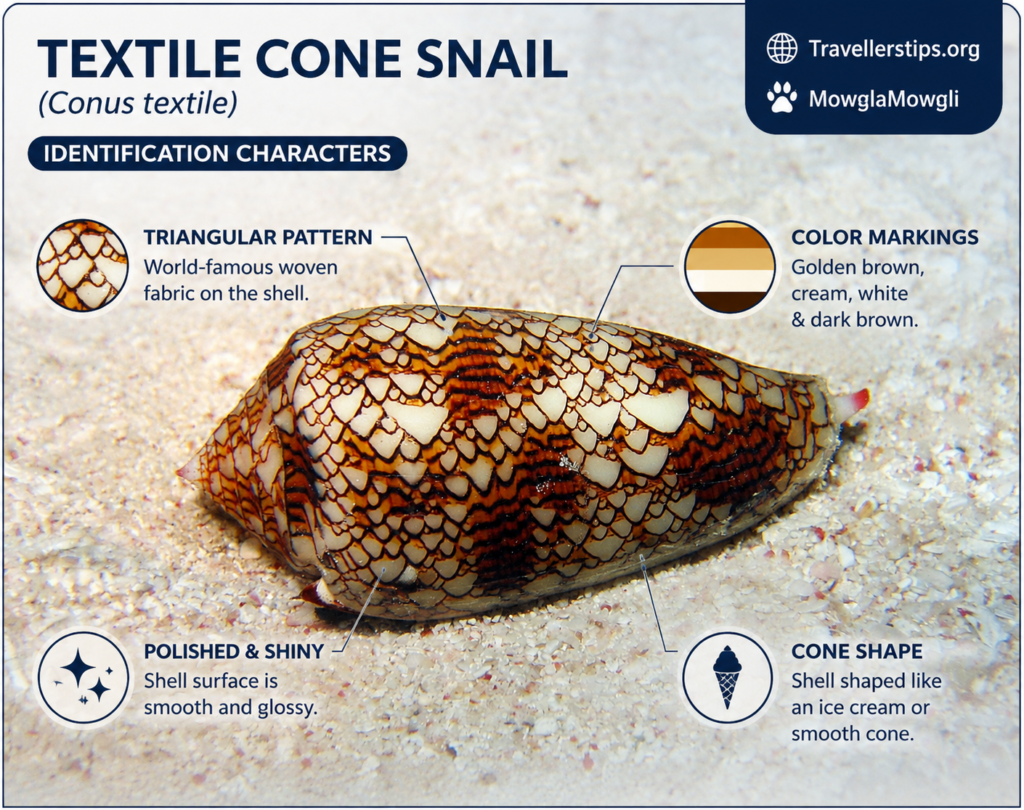
3. Textile Cone Snail
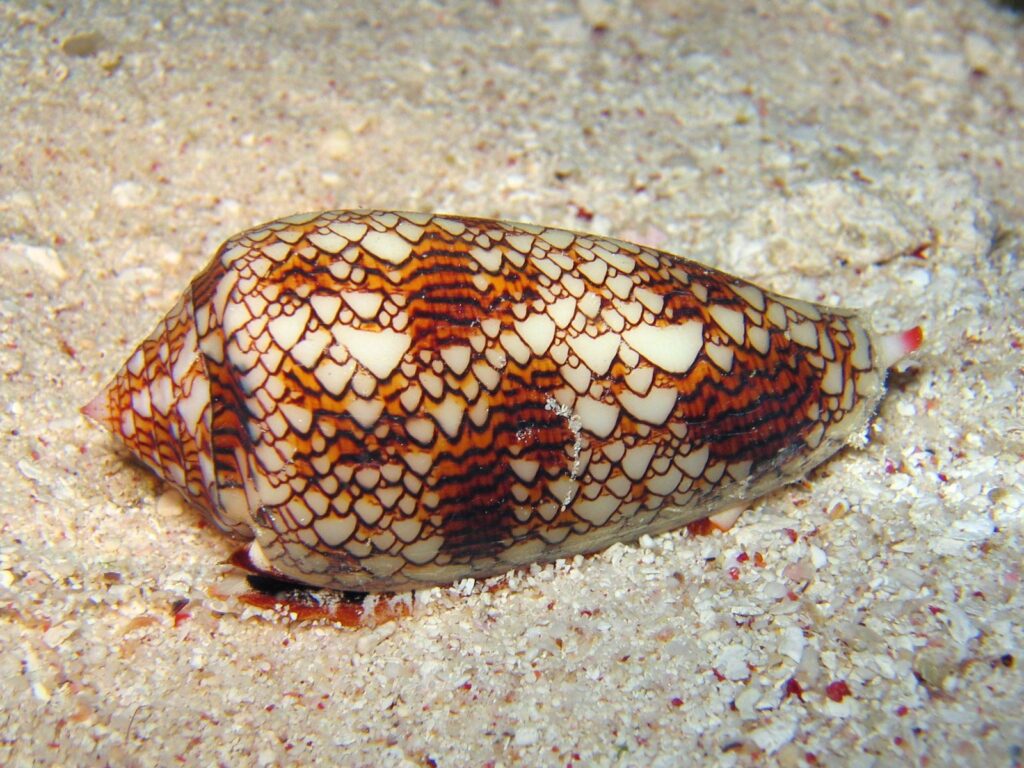
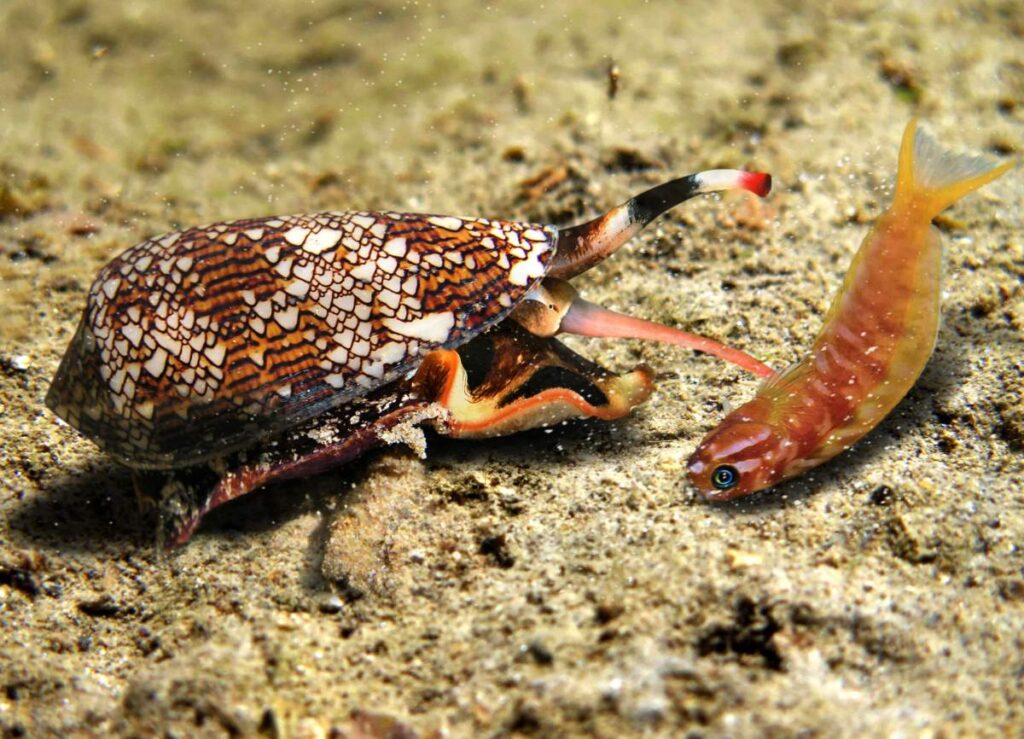
Textile Cone Snails are just as dangerous as it is beautiful to behold in the ocean. The “Textile” name comes from its beautiful triangle shape pattern on the shell and world famous woven fabric. Other side the Venom of this creature able to kill a fish and serious harming condition of human.
Habitat :
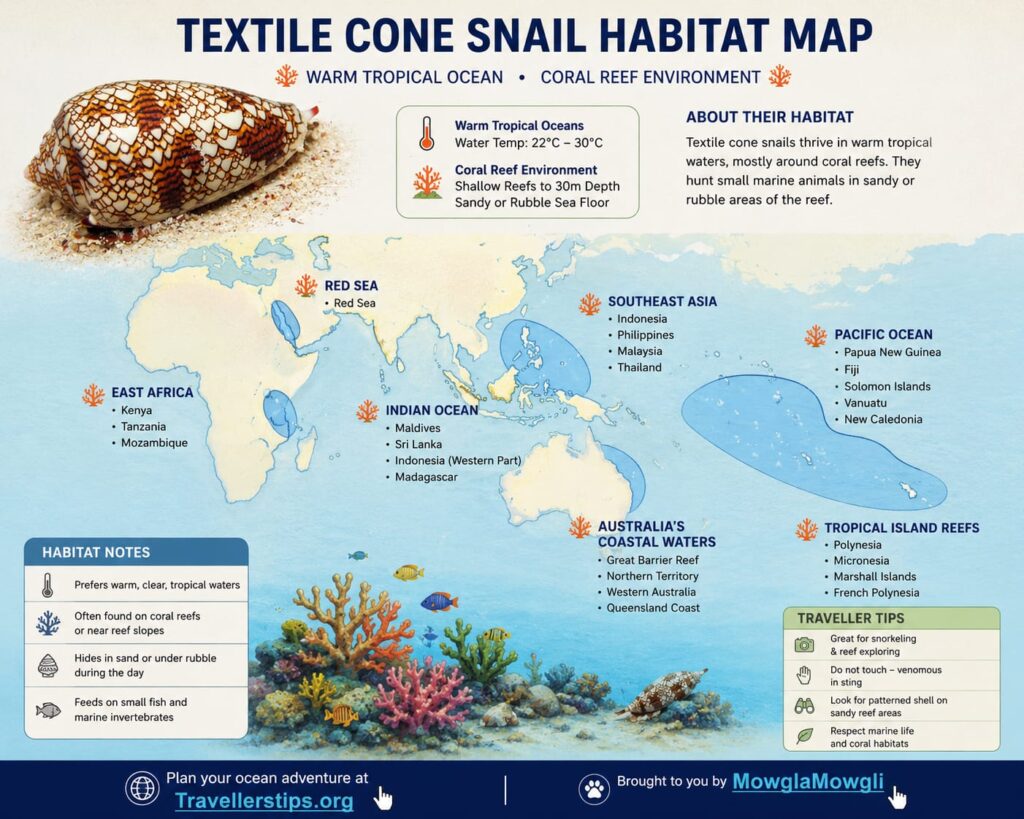
Textile cone snail habitat, like the Geography cone snail warm tropical oceans and also in the coral reef Environment. They are found primarily in the Indian Ocean, Southeast Asia, the Pacific Ocean, East Africa, Australia’s coastal waters, and tropical island reefs.
Identify Character :
- Triangular pattern and world-famous woven fabric on the shell.
- The markings on the shell are golden brown, cream, white and dark brown.
- The shell’s surface is polished and shiny.
- The shape of the shell is like an ice cream or smooth cone.
Venom :
The venom contains Conotoxins. It is a neurotoxin which targets the nerve, muscle and also breathing.
Does it kill a human?
The sting of the snail is able to kill a human, but it is very rare. According to the current report, there are already more than 30 humans dead, which is linked to this creature. The venom of this snail mainly targets the nervous system, respiratory system and muscles.
What should I do after the sting?
There is no antivenom or antidote for this venom. Please, follow the Geography cone snail and octopus.
4. Striated Cone Snail
The Striated Cone snail is another highly venomous snail in our world. The name of the snail comes from a thin strip mark. The thin strips run across a long, narrow line and an attractive glossy pattern on the surface of the snails. They use their harpoon-like teeth to sting their prey.
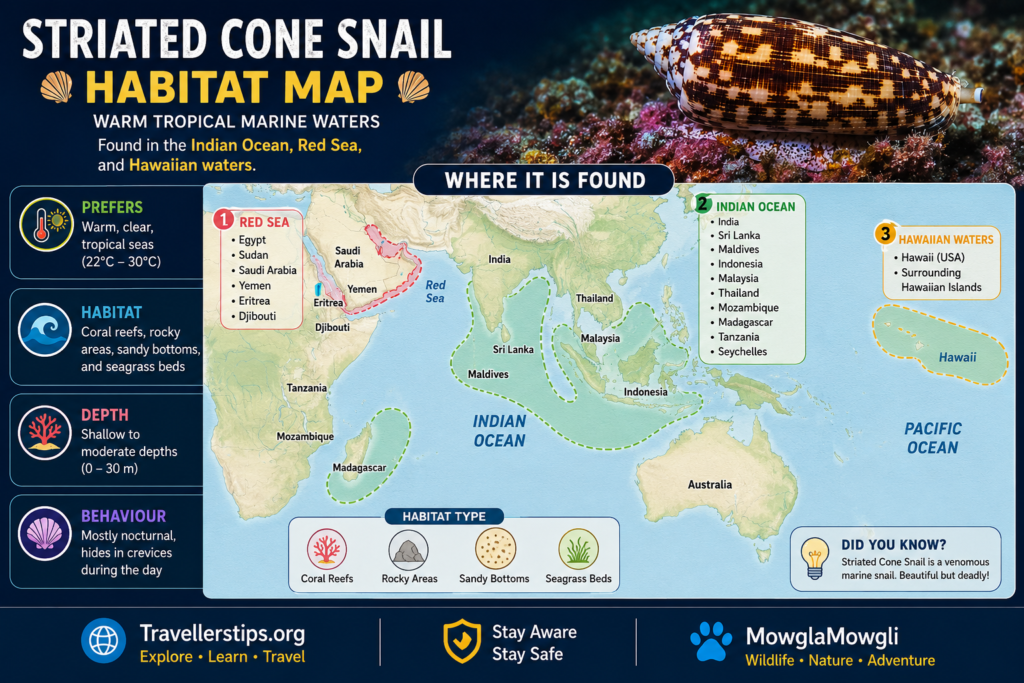
Habitat :
The primary habitat of the snail is warm tropical marine water. Generally, it is found in the Indian Ocean, the Red Sea, and Hawaiian waters.
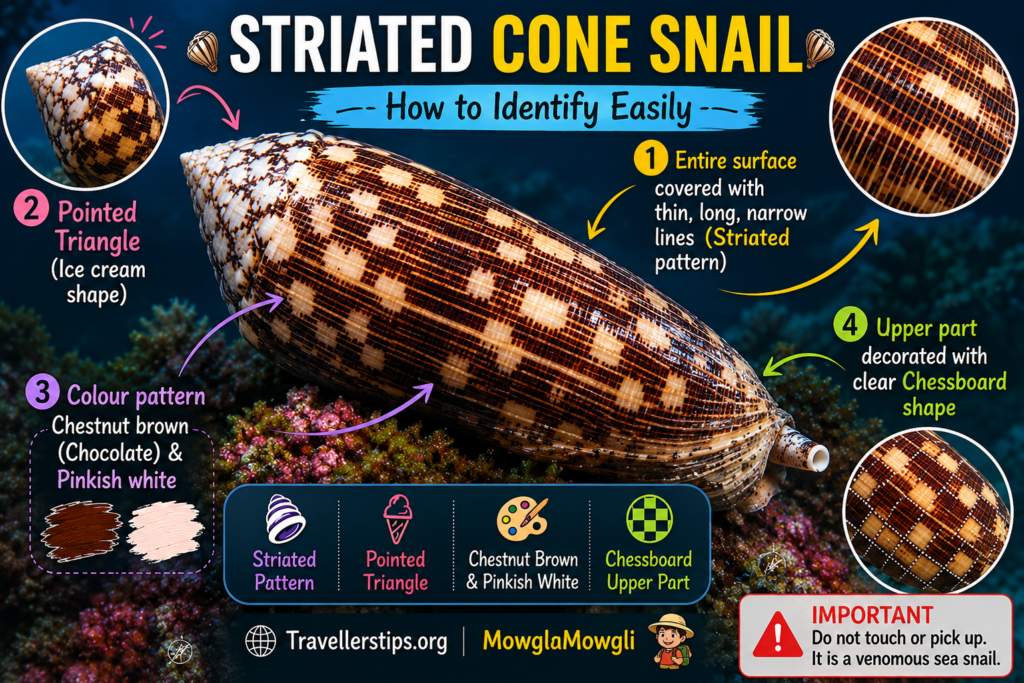
How can I identify them?
- The entire Snail surface is crossed by a thin, long, narrow line (Striated pattern) and an attractive glossy pattern.
- It looks like a pointed triangle and ice cream.
- The Colour pattern is chestnut brown or chocolate and pinkish white.
- The upper part of the shel is decorated by a clearly visible chessboard shape.
Venom :
This beautiful marine snail contains a complex venom, which is known as Conotoxin. It is a powerful Neurotoxin. Biologists can not make their antidotes or antivenom yet. This venom primarily targets the nerves and muscles.
Does it kill a human?
Yes, the sting of the snail is able to kill humans, but it is very rare. According to the scientists, around 40 humans are already dead worldwide due to all cone snails (pubmed.ncbi.nlm.nih.gov, 2016). But due to the Striated cone snails being dead record very less like 2-3 humans. It is less harmful than the Geography cone snails.
What should I do after the sting?
There is no antivenom or antidote for this venom. There is no antivenom or antidote for this venom. Follow the Geography cone snail and octopus.
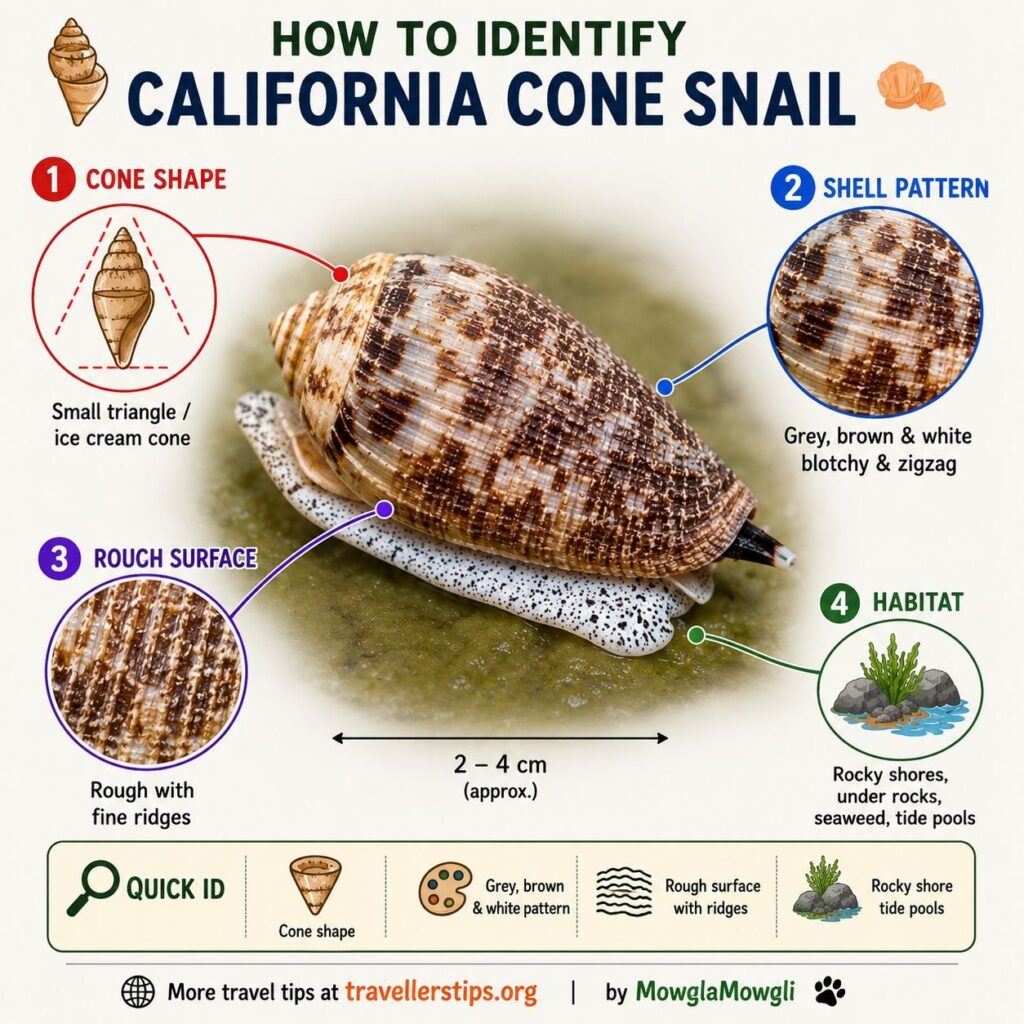
5. California Cone Snails
California Cone snail is one of the unique molluscs in the ocean world. Primarily this snail found in the coast of California that’s why its name “California Cone Snails”. The outside of the snail is so beautiful but the inside of the snail is so dangerous because of Venomous. This snail uses his harpoon-like tooth for hunting prey under water.
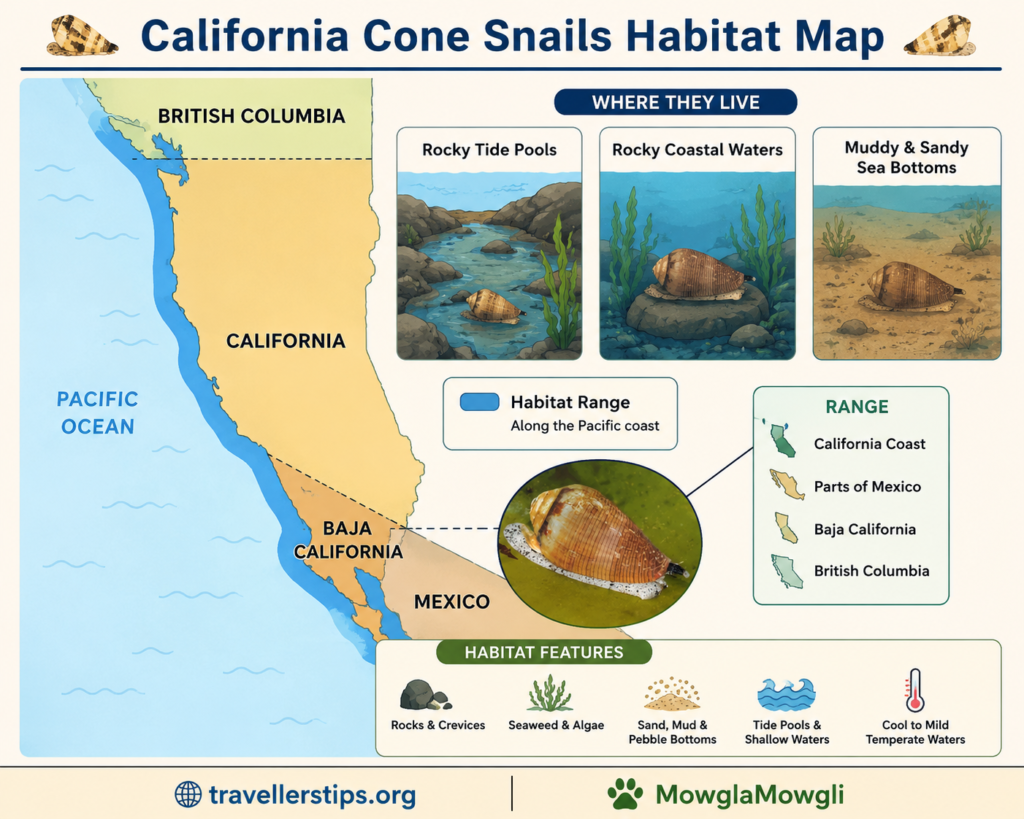
Habitat:
Generally they are living in Rocky tide pools and Rocky coastal water. They are also found in muddy and sandy sea bottom. They are generally found in California coast, Parts of Mexico, Baja California and British Columbia.
How can I identify?
- This cone looks like a small triangle and an ice cream cone.
- The shell is decorated with a mixture of grey, brown and white, which is blotchy and zigzag.
- The surface of this snail is rough as compared to other cone snails.
Venom?
This Venom is known as Conotoxin, which is a neurotoxin. It is less poisonous, and it targets our nerves and muscles.
Does it kill humans?
There is not yet any human dead due to the sting of these cone snails.
What should I do after the sting?
There is not any antidots or antivenoms for this venom. Doctor care based on breathing support. Do the same things as Geography cones and other cone snails.
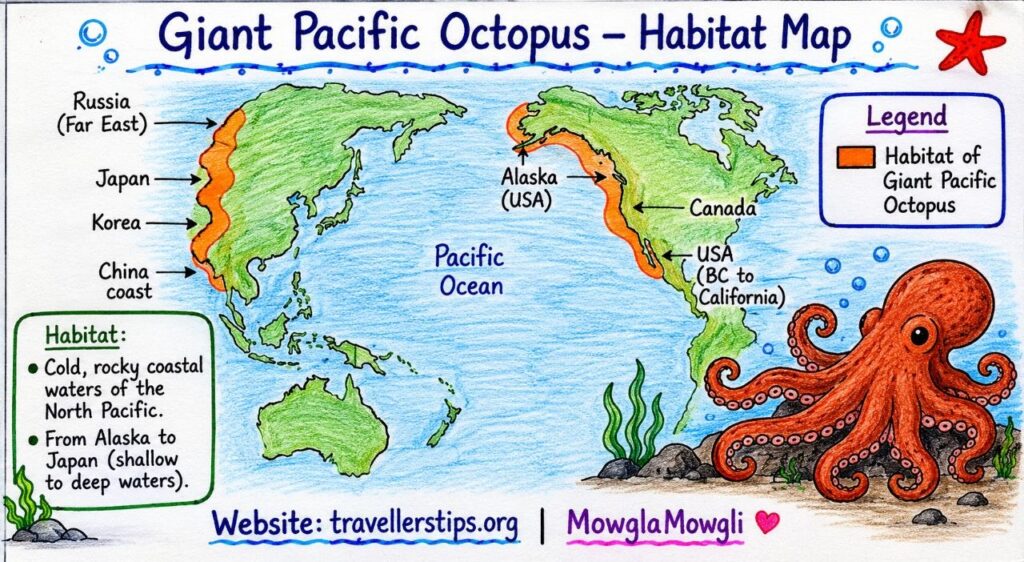
6. Giant Pacific Octopus
The Giant Pacific Octopus is one of the most intelligent invertebrates in the ocean world. They have a great ability to camouflage. This amazing character allows them to hide from predators. They have 3 hearts and blue cold blood. This blood helps them to survive in the cold ocean water.
Are they dangerous for Humans?
Generally, they are not dangerous to humans. But their bite can cause skin damage, pain, bleeding and Swelling.
7. Humboldt Squid
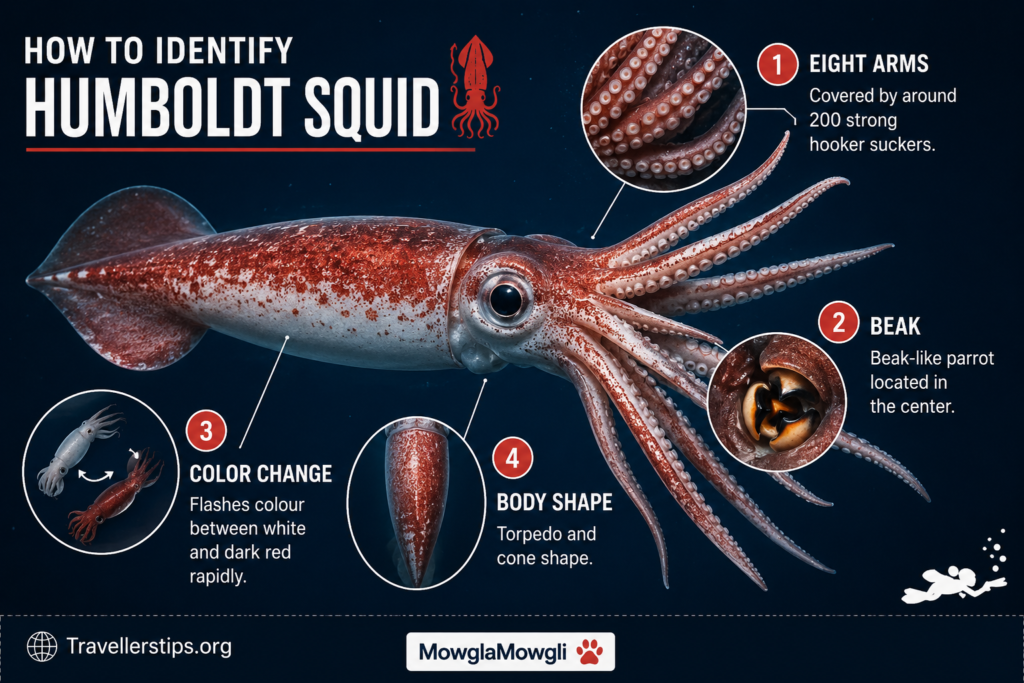
The Humboldt Squid is one the mysterious and intelligent creatures in deep ocean water. They change (flashes) colour between white and dark red rapidly during communication, hunting and aggressive mode. They are also known as “Red Devil” due to his aggressive hunting strategy.
Habitat :
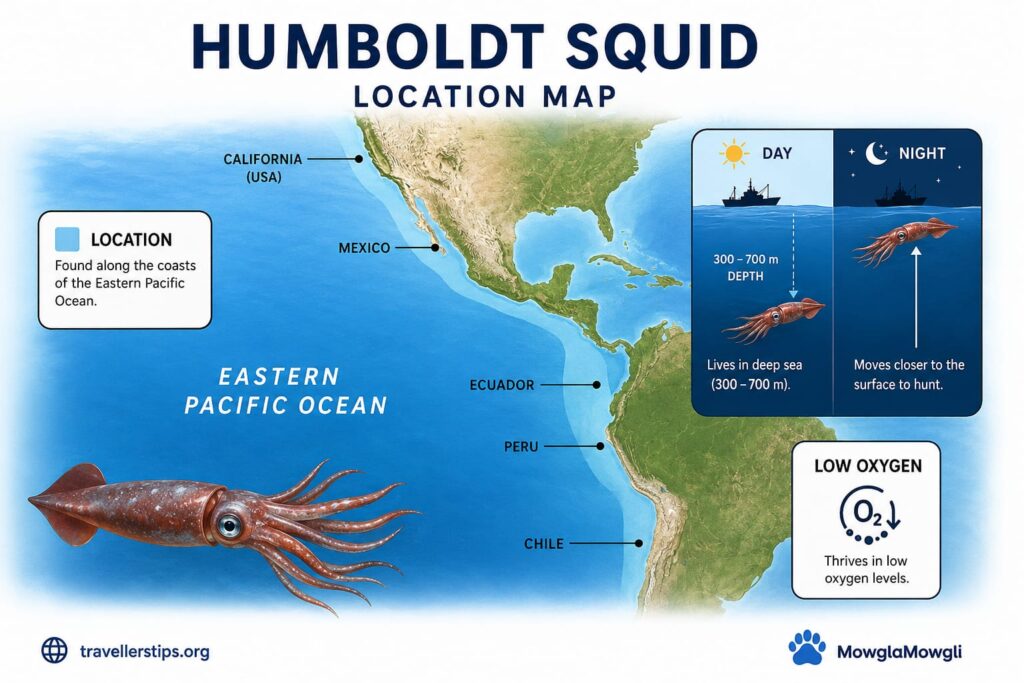
Their main habitat is the “Eastern Pacific Ocean”. Generally they are found in Peru, Ecuador, Chile, California, Mexico, etc. Daytime, primarily Humboldt Squid are living in the deep sea between 300 to 700 metres from the surface level. At night, they move close to the surface for hunting. They are living in low oxygen levels, it is one of the unique qualities of this intelligent creature.
How to Identify :
They have Eight arms and they are covered by around 200 strong hooker suckers.
Beak-like parrot which is located on the right in the center.
They change (flashes) colour between white and dark red rapidly.
The shape of the body is like a torpedo and cone shape.
Are they harmful to humans ?
They are not Venomous. There are not any records yet where Humboldt Squid directly kill any human. It is very rare. They are able to cause serious injury to fishermen and divers.
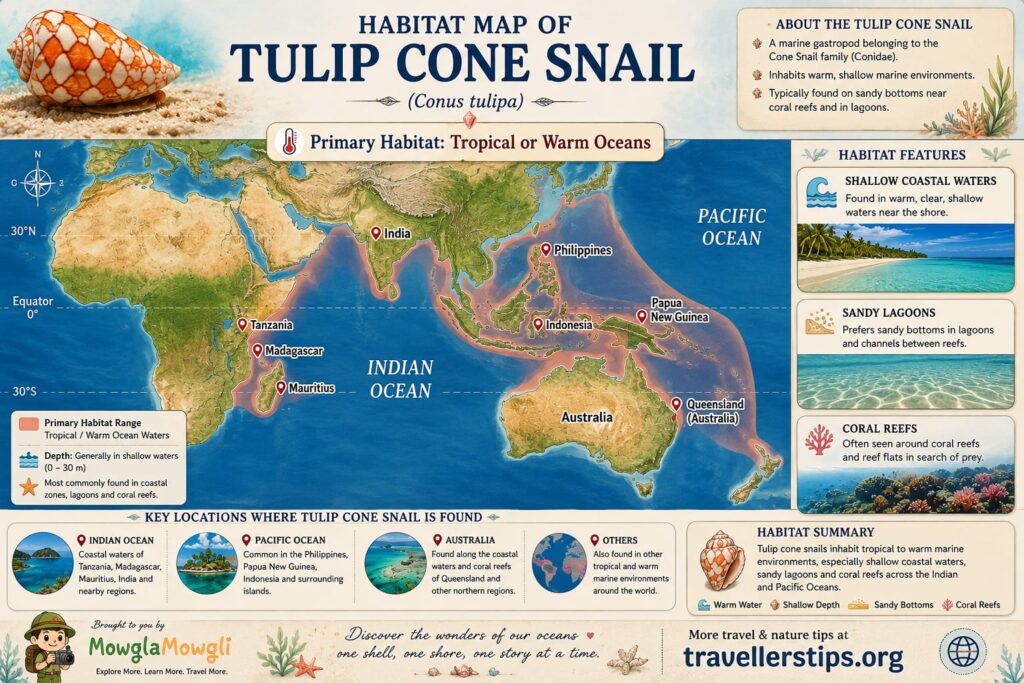
8. Tulip Cone Snail
Tulip Cone Snail is another beautiful and most venomous cone snail. This Cone snail looks like a Tulip that’s why it is known as the Tulip cone snail. It also looks like an Ocean professional art work. The harpoonlike tooth is able to kill a marine animal and small fish within one second.
Habitat :
The primary habitat of the cone snails in the Tropical ocean or Warm ocean. It is generally found in the Indian ocean, shallow coast water,pacific ocean, Sandy lagoon, coral reefs like Philippines, Papua New Guinea, Australia and Indonesia and others.
Strategy to Identify :
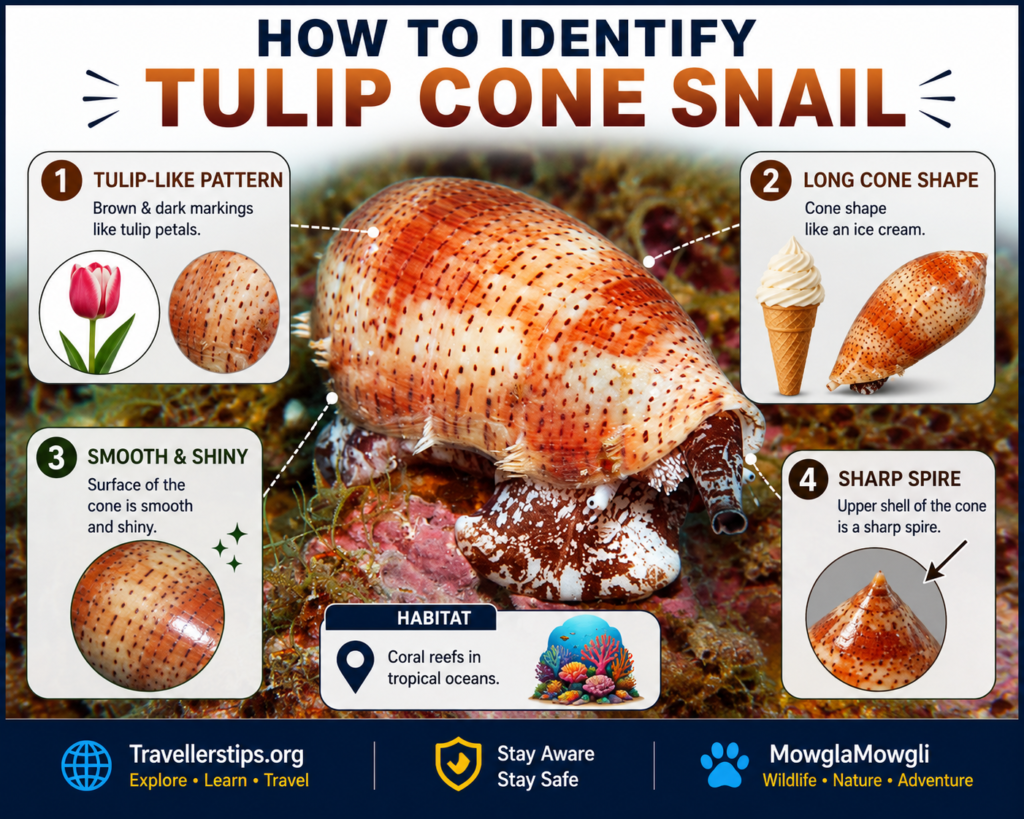
They look like tulip flowers with brown and dark markings identical to flower petals.
The cone is identical to the ice cream and long.
The surface of the cone is smooth and shiny.
The upper shell of the cone is a sharp spire.
Venom details :
The venom of these cone snails is so powerful. The venom of the snail is known as Conotoxin. It is primarily targeted on the nervous system and muscle. It is able to paralyse a prey within a second.
Does it kill any human?
Yes, but very rare.
What will you do?
There is no antivenom or antidote for this venom. Follow the Geography cone snail and octopus.
9. African Giant Snail
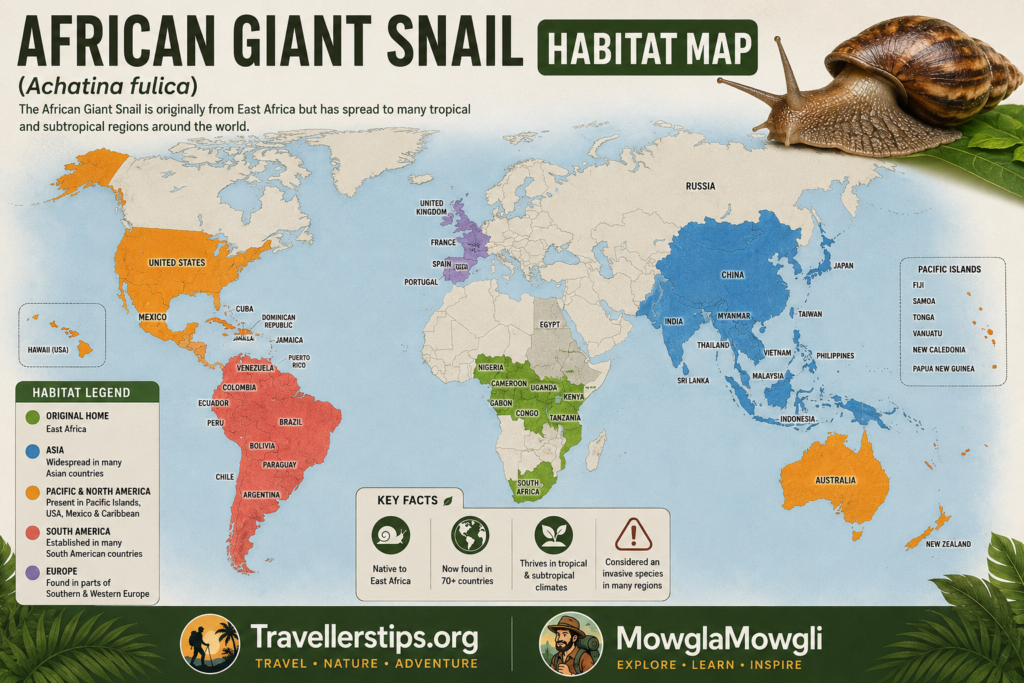
The African Giant Snail is the largest land snail as compare to other snail in the world. Primarily this snail is found in Africa that’s why it is known as African giant Snail. In reproductive terms, they belong to the hermaphrodite. Hermaphrodite means both Male and female organs are present in the same body. They are able to lay hundreds of eggs in a year. They are dangerous for plants and crops because they spread several diseases.
Habitat:
They are totally terrestrial snails and vegetation. They are primarily found in tropical, humid, and warm environments. Giant African snails prefer to live in plenty of leaves Llike garden, Forest, Agriculture field and also wetlands. They are more active in the Rainy season. The first time it was in Africa, but now it is spread to different locations like Asia, Pacific Islands, South America and parts of other Europe and United States.
How to identify them:
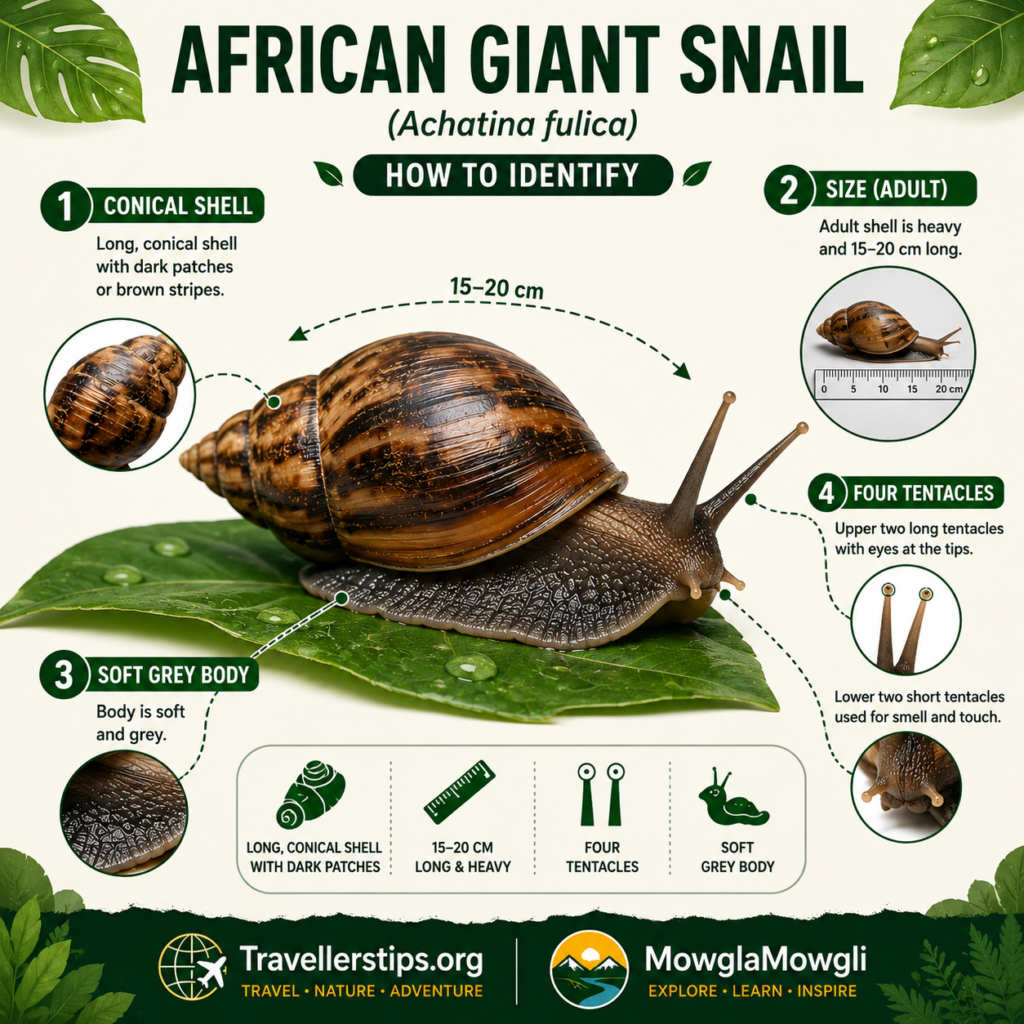
- The size of the Shell Long, Cone Shaped and generally dark patches or strips with brown colour.
- The Adult shell is Heavy and 15-20 cm long.
- Their body is soft and Grey.
- They have four tentacles. The upper two are long with eyes and lower two tentacles are small use smell and touch.
Is it dangerous for Human?
Yes, they are dangerous for human indirectly. They are carrying several types of parasites, bacteria, fungi, nematodes and varity of microorganism.
- Some Parasites : Rat lungworm (It responsible for meningitis) Angiostrongylus costaricensis (Cause Abdominal disease), Trematodes (Intermediate host) and Roundworm.
- Some bacteria like Salmonella and , Aeromonas, (responsible for stomach cramps, diarrhea and vomitting also), E.Coli (Some are causing Kidney damage, Stomach issue) and Klebsiella (lung infection, bloodstream infections, urinary tract infections and more).
Protection Tips :
- Don’t touch it in bare hand.
- Wear glove and touch it, wash your hand carefully.
- If snail found in cultivation area then Wash your Vegetable carefully.
- Avoid to eat raw snails.

Nature Writer & Content Creator
Mowgla (I) have Very Deep Interest passion ,and Knowledge on wildlife, art and Nature.

Zoologist & Content Creator
Mowgli (I) have a very depth knowlege on animal behaviour and Nature.

Thank you so much please share you experience. If you want to know anything, then mentioned in the comment in the section. we will try to give information properly. Read our exprience on Sundarban explore, India.
You May Also Like
Experience of KANGER Valley National Park
March 5, 2025
How will you explore India first time without Tour Agent (A-Z)
September 28, 2025